
Why FORTS® Temporary Fire Stations Are a Long-Term Infrastructure Investment, Not a Short-Term Expense
Fire departments across the United States are facing the growing challenge of maintaining emergency response operations while stations undergo renovation, expansion, or replacement. Traditionally, the solution has been simple. Use it for the duration of the project, then remove or discard it. This approach may create a short-term fix but it could have been also a long-term solution. FORTS® introduces a fundamentally different model. A Temporary Fire Station that becomes a short and long-term, redeploy-able infrastructure asset.
What Is a FORTS® Temporary Fire Station?
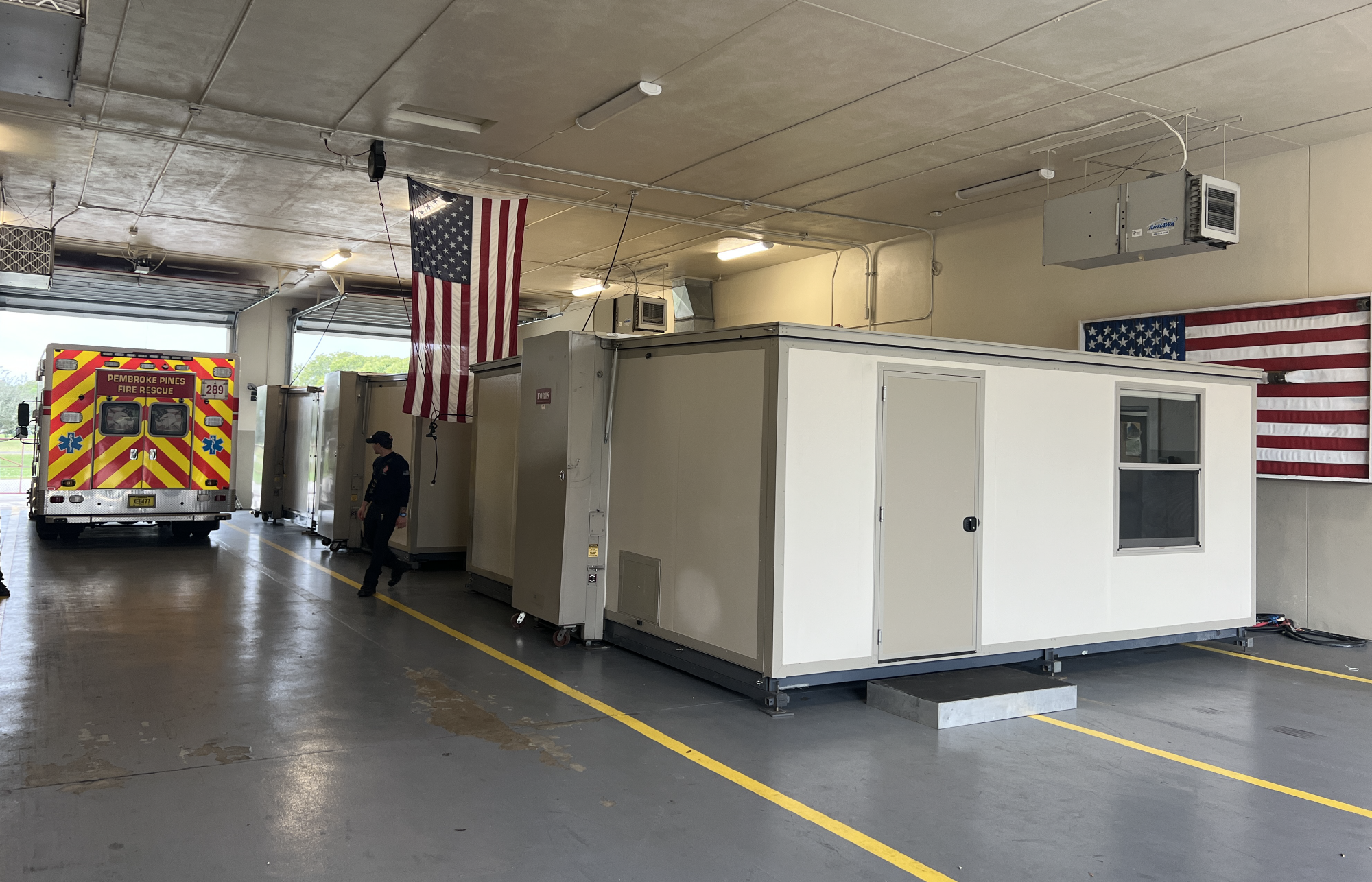
A FORTS® Temporary Fire Station is a rapidly deployable, hard-walled insulated mobile facility designed to maintain full operational continuity for fire departments during:
Station renovations
New construction projects
Emergency displacement scenarios
Population growth and coverage expansion
Each system is engineered for durability, mobility, and long-term use, with a 30+ year lifecycle.
The Problem With Traditional Temporary Fire Stations
Most temporary fire station solutions share the same limitations:
Designed for single-use or limited use deployment
Fixed in place with limited and difficult mobility
Minimal adaptability for future operations
Often abandoned, resold at a loss, or demolished
Not ADA friendly
Limited Wind Ratings
Limited Customization
Result:
A significant capital expense that delivers zero long-term value.
The FORTS® Difference: Built for Lifecycle Value
A Multi-Mission Infrastructure System
FORTS® systems are not designed to be discarded after use. Instead, they are engineered to evolve with the department’s needs.
Phase 1: Primary Mission
Deploy as a fully functional Temporary Fire Station:
Sleeping quarters
Kitchen and restroom facilities
Office workspace
Climate-controlled living-room environment
Maintains fast response times and ensures uninterrupted service.
Phase 2: Transition
Once the permanent station is complete, the system is no longer needed in its original configuration. Unlike traditional buildings, it does not become obsolete.
Phase 3: Redeployment
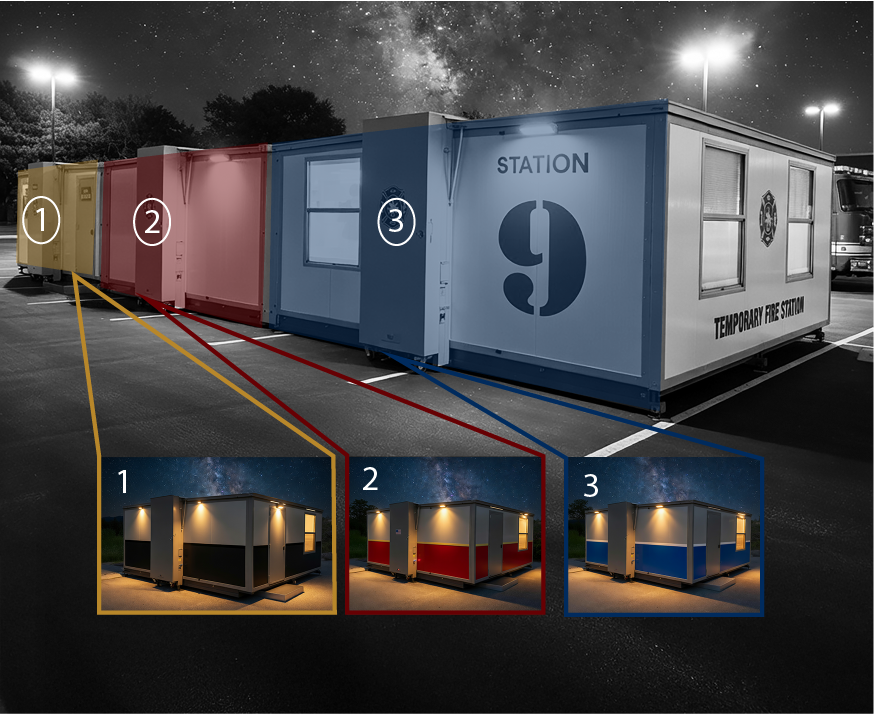
Each unit separates into independent, mobile assets that can be repurposed across multiple missions:
Common Post-Deployment Uses
Incident Command Post
This is one of the strongest follow-on uses because it keeps the building in an operational role that fire departments immediately understand. It provides a professional, deployable space for command staff, planning, communications, and multi-agency coordination during incidents, disasters, and special operations. The value is not just shelter. It has improved organization, decision-making, and operational control in the field.
Temporary Bunking / Crew Quarters
If another station is under renovation, damaged, overcrowded, or temporarily offline, the system can continue supporting staffing continuity. This helps departments avoid disruption to crew readiness and daily operations. The value here is that the building can continue supporting personnel without the department having to start over on another temporary housing solution.
Rehab / Responder Recovery Space
Fire and first responder operations often require a controlled environment for rest, hydration, cooling, warming, and recovery. Using the building as rehab space helps support responder health, performance, and endurance during extended incidents, training events, and special operations. The value is giving crews a more structured recovery environment that supports sustained operational readiness.
Disaster Response Staging / Field Operations
This use reinforces that the asset has relevance beyond day-to-day station continuity. During hurricanes, floods, wildfires, search and rescue operations, or other all-hazards events, the building can support field coordination, staging, planning, and personnel support. The value is that the department retains a deployable asset that can immediately support disaster operations without relying on outside temporary infrastructure.
Training Support Building
Training space is often limited, shared, or not always available where it is needed. Repurposing the building for training gives departments a dedicated space for classroom instruction, briefings, officer development, EMS education, after-action reviews, and drills. The value is a continued departmental benefit from the asset even when it is not being used for emergency continuity.
EMS Support / Medical Surge Space
For fire departments with EMS responsibilities, this building can continue supporting medical operations after the temporary station mission ends. It can be used for EMS standby, triage support, patient monitoring, surge operations, or incident medical support. The value is added flexibility for departments that need adaptable space for both fire and medical response functions.
Administrative Swing Space
Departments often run into temporary space issues tied to office renovations, station repairs, growth, or overflow support functions. The building can provide a professional interim workspace for leadership, support staff, or operational administration. The value is that the system can help preserve continuity of operations across more than just field response needs.
Logistics / Equipment Support
Large incidents and temporary operations create a need for organized supply, equipment, and staging support. The building can help support PPE management, supply coordination, incident check-in, and logistics functions. The value is improved organization and support capability during sustained operations or departmental transitions.
Special Event Operations
Departments are often asked to support fairs, festivals, sporting events, concerts, and other planned gatherings where temporary public safety infrastructure is needed. The building can serve as a base for command, staffing, rehab, or operational coordination. The value is that the system can continue generating practical use during non-emergency but operationally important events.
Mutual Aid / Regional Response Asset
For departments that support neighboring jurisdictions, county coordination, or regional incident response, the building can serve as a deployable shared-use asset. This helps expand the long-term value of the purchase beyond one department’s single project. The value is broader readiness and increased usefulness during larger multi-agency operations.
Community Risk Reduction / Public Safety Outreach
Although not a primary operational use, the building can support smoke alarm campaigns, preparedness outreach, public safety education, and seasonal community programs. The value here is that the asset can remain visible and useful even outside emergency response operations, supporting the department’s public-facing mission.
Temporary Personnel Support Space
Even when not acting as a full station or command post, the building can still serve as a flexible support space for reporting, meetings, supervision, documentation, meal breaks, and day-to-day personnel functions. The value is continued adaptability. It gives the department another usable building rather than a single-purpose asset with a limited life after the first mission.
Why This Matters - The Financial Perspective
From Expense to Asset
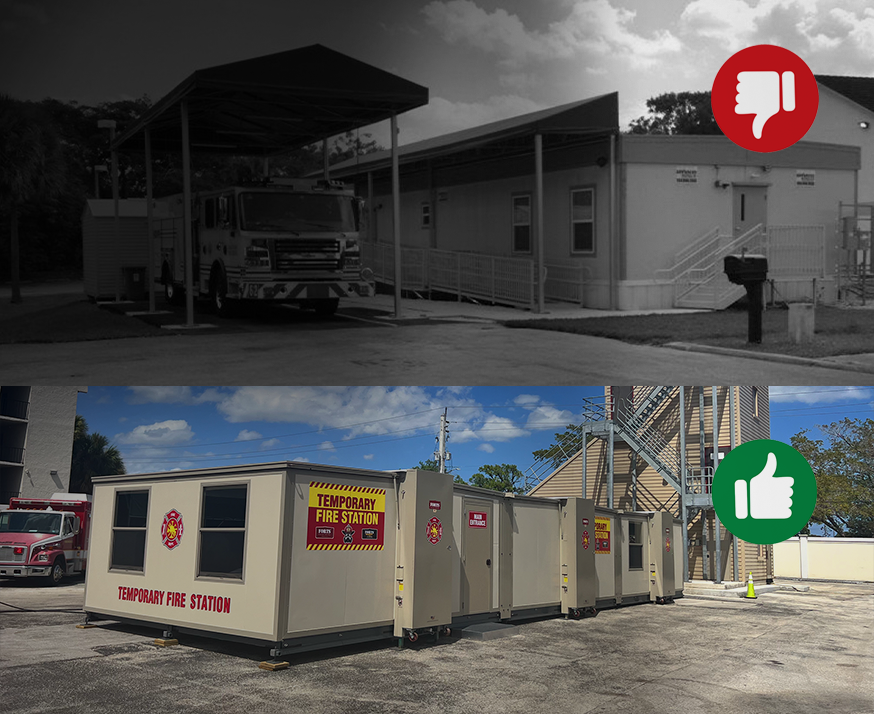
Traditional temporary buildings:
Depreciate to zero
Require replacement for future needs
Offer no return beyond initial use
FORTS® systems:
Maintain long-term operational value
Reduce future capital expenditures
Serve multiple divisions, departments and missions
Deliver continuous return on investment
Key Insight:
Most temporary buildings solve one problem once. FORTS® solves multiple problems for decades.
Who Benefits From FORTS® Systems?
Fire Chiefs
Maintain reduced response times during facility disruptions
Expand operational flexibility
Gain long-term departmental mobile assets
City and County Officials
Maximize taxpayer investment
Reduce infrastructure waste
Support multi-agency utilization
Emergency Management Agencies
Gain deployable infrastructure for disaster response
Improve regional readiness and coordination
Strengthen long-term resilience planning
Sustainability and Public Investment
FORTS® systems support modern government priorities by:
Eliminating single-use infrastructure
Extending lifecycle value across multiple missions
Supporting long-term public safety planning
Added value by custom branding of unit with department logos
The future of emergency response infrastructure is not temporary, it is adaptable, mobile, and built for long-term use. FORTS® represents a shift in how fire departments and municipalities approach infrastructure investment.
Built for the mission today. Ready for every mission after.
See How FORTS® Can Support Your Department
Schedule a live demonstration or speak with our team to explore how FORTS® can maintain your operations today and expand your capabilities for years to come. Send email to Frank Babinec fbabinececcservices@gmail.com - or Elan Zadok - ezadok@fortsusa.com | Visit our booth at FDIC International 2026 is scheduled for April 22-25, in Indianapolis, Indiana, at the Indiana Convention Center and Lucas Oil Stadium.

Frequently Asked Questions (FAQ)
How long does a FORTS® Temporary Fire Station last?
FORTS® systems are engineered for a 30+ year lifecycle, making them a long-term infrastructure asset.
Can the units be separated after deployment?
Yes. Each unit is fully independent and can be separated and redeployed for different operational uses.
What happens after the station project is complete?
The system is repurposed into multiple mobile units that can support command, EMS, training, disaster response, and more.
Is this more cost-effective than traditional temporary buildings?
Yes. While the initial investment may be higher, FORTS® delivers significantly greater long-term value by eliminating the need for future temporary infrastructure purchases.
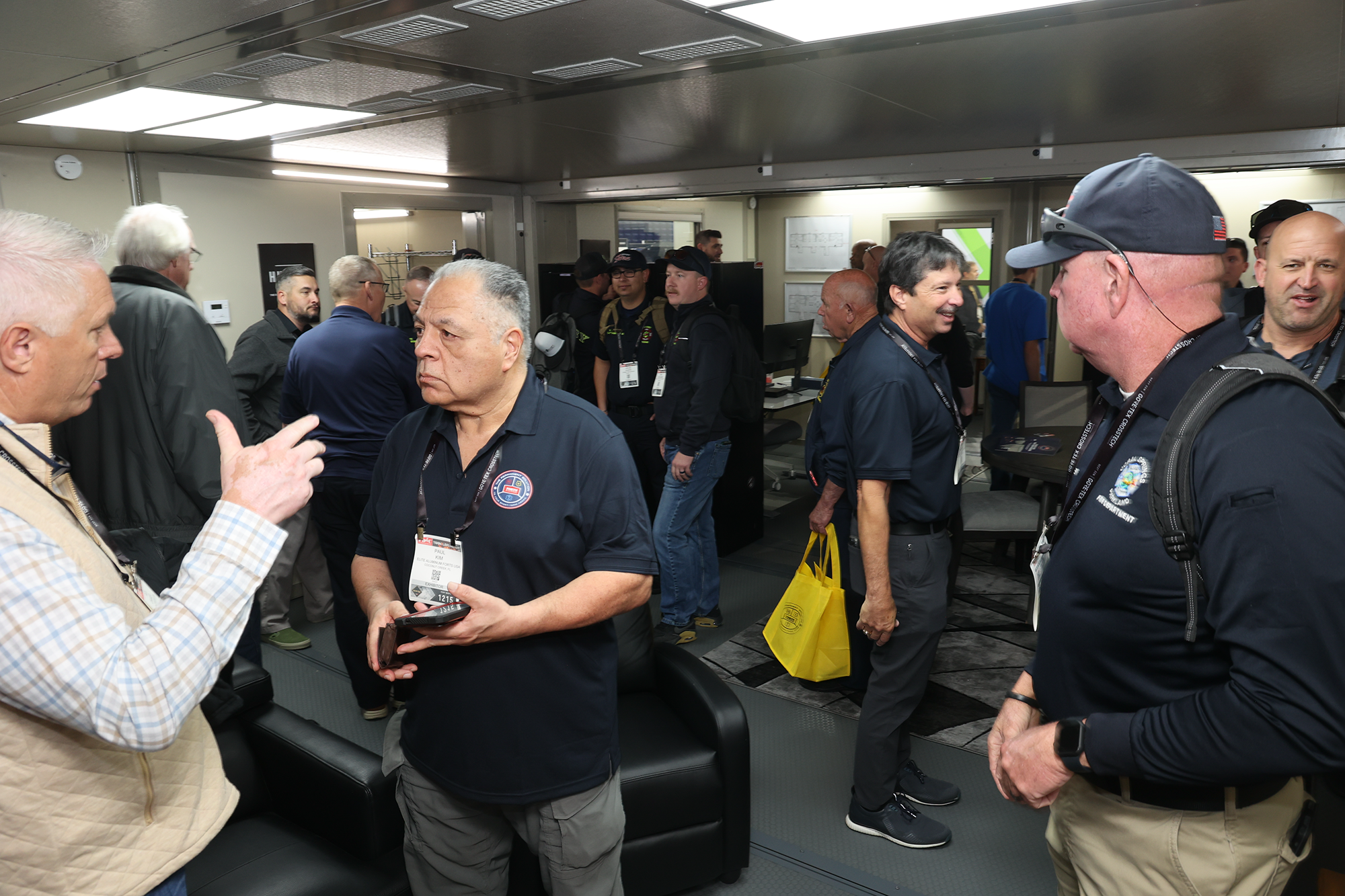
Meet & Greet at FDIC 2026
Visit Booth #9013
Can’t make it to the show this year? That’s ok, view the Temporary Fire Station in 3D/VR. Click here to access.
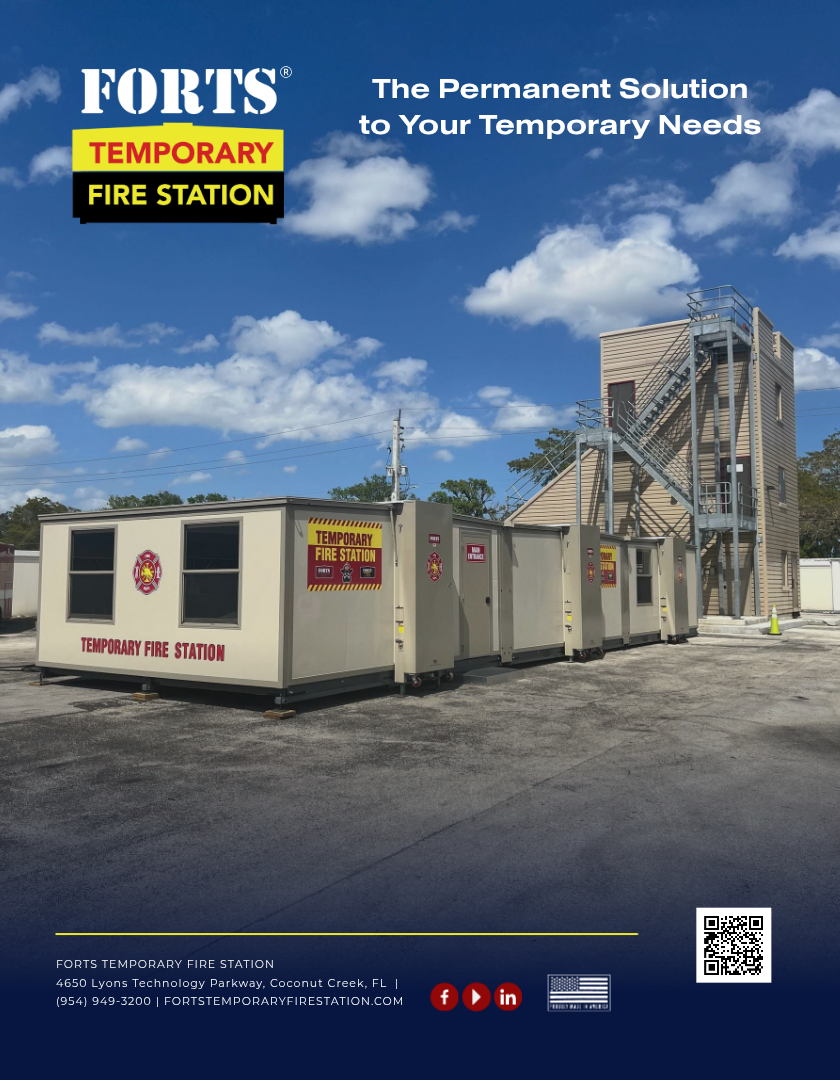
FORTS Temporary Fire Station Digital Catalog
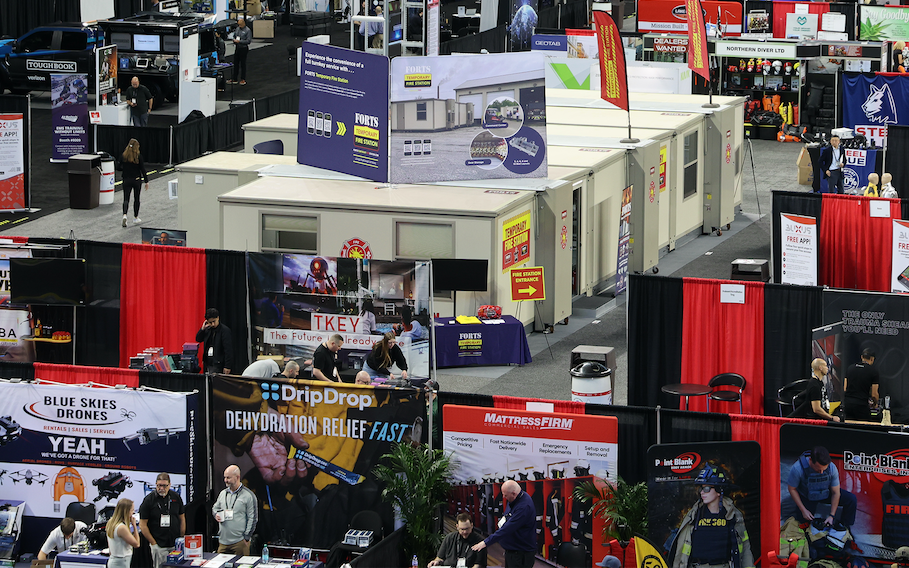
FDIC 2025
Here’s how FORTS® represented their popular Temporary Fire Station last year! View Now
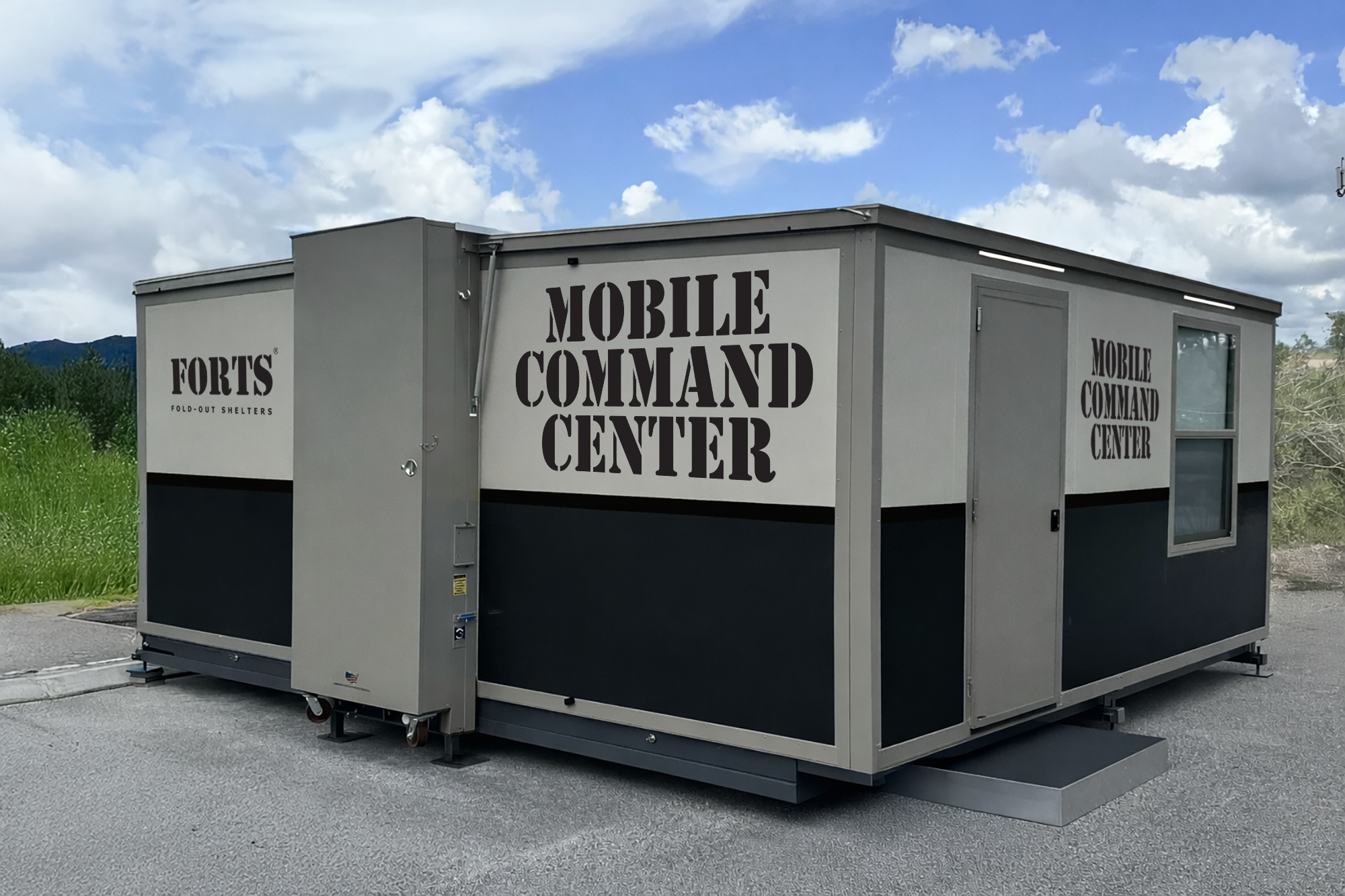
Mobile Command Center on the Field.
Why are more Fire Chiefs in the South requesting Command Centers this year than ever before? Learn More Here!
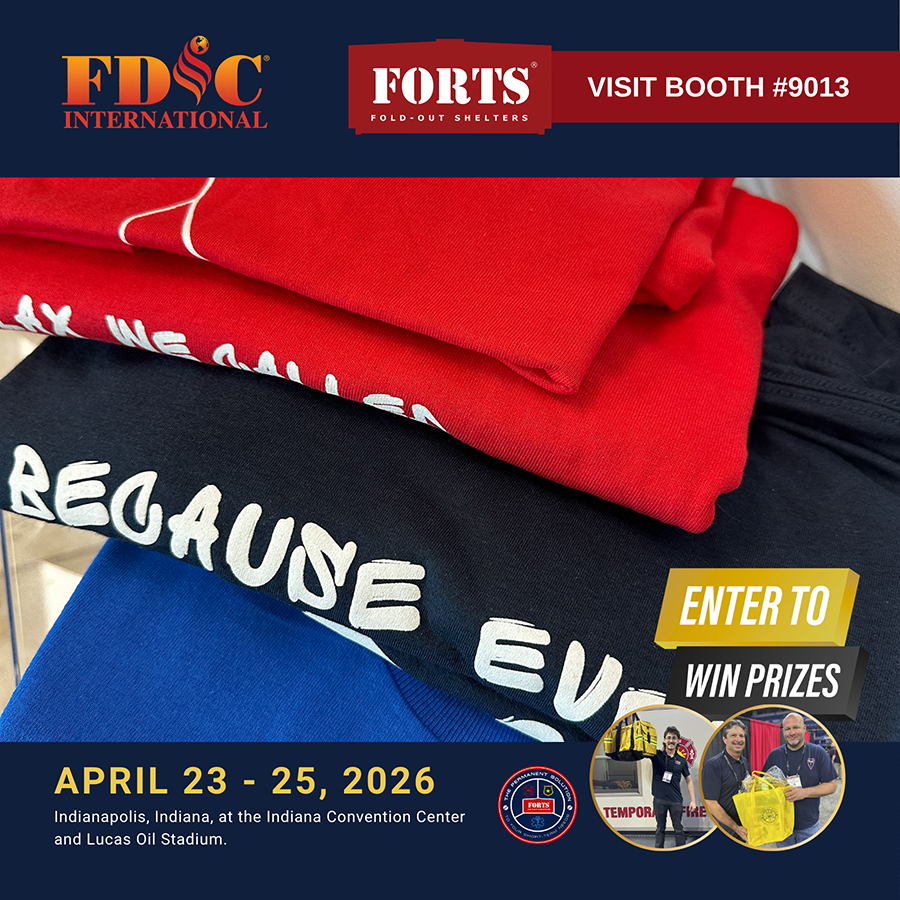
Skip the line and sign up for the Raffle Now! Visit Booth # 9013 and ask for Nathalie to get your Raffle Ticket!
Good Luck Winners!

