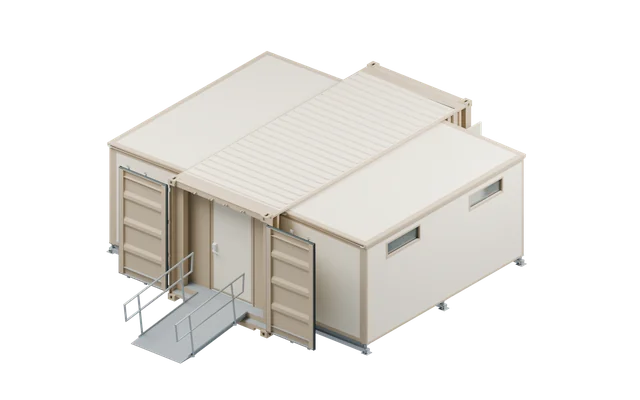
The Smarter Way to Keep Operations Running While Everything Else Changes
America's critical infrastructure is under pressure. There are fire stations built before most of today's firefighters were born. Hospitals expanding while patients still fill every bed. Communities hit by disasters that arrive faster than any recovery plan anticipated. Across the country, emergency response agencies, healthcare systems, and government organizations are being asked to do something that traditional construction was simply never designed to support, which is to stay fully operational while everything around them changes.
That gap between what permanent facilities can offer and what modern operations actually demand is exactly where rapidly deployable infrastructure is proving its value.
The limitations of conventional construction aren't a criticism of the industry. Permanent facilities remain the backbone of long-term infrastructure planning. However a hospital cannot pause emergency care for 18 months while a wing is renovated. A fire department cannot go dark while its station is rebuilt. And an emergency management agency cannot wait three years for additional capacity when a disaster is happening right now
According to the National Fire Protection Association, an estimated 21,710 fire stations across the United States were at least 40 years old as of 2020 lacking modern safety systems, backup power, and the operational layouts today's emergency response requires. These agencies are expected to maintain full readiness anyway and the reality is traditional construction offers no solution to that problem.
Speed, in this environment, isn't just an advantage. It's critical.
The United States recorded 27 separate billion-dollar weather and climate disasters in 2024 alone, resulting in roughly $182.7 billion in damages, according to the National Oceanic and Atmospheric Administration. Modern emergencies don't wait for design approvals, funding cycles, or construction timelines. The traditional model is to identify a need, secure funding, design a building and wait years. This is increasingly incompatible with the pace at which facilities are being forced to respond.
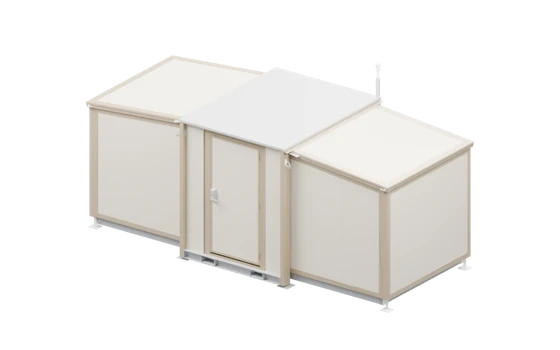
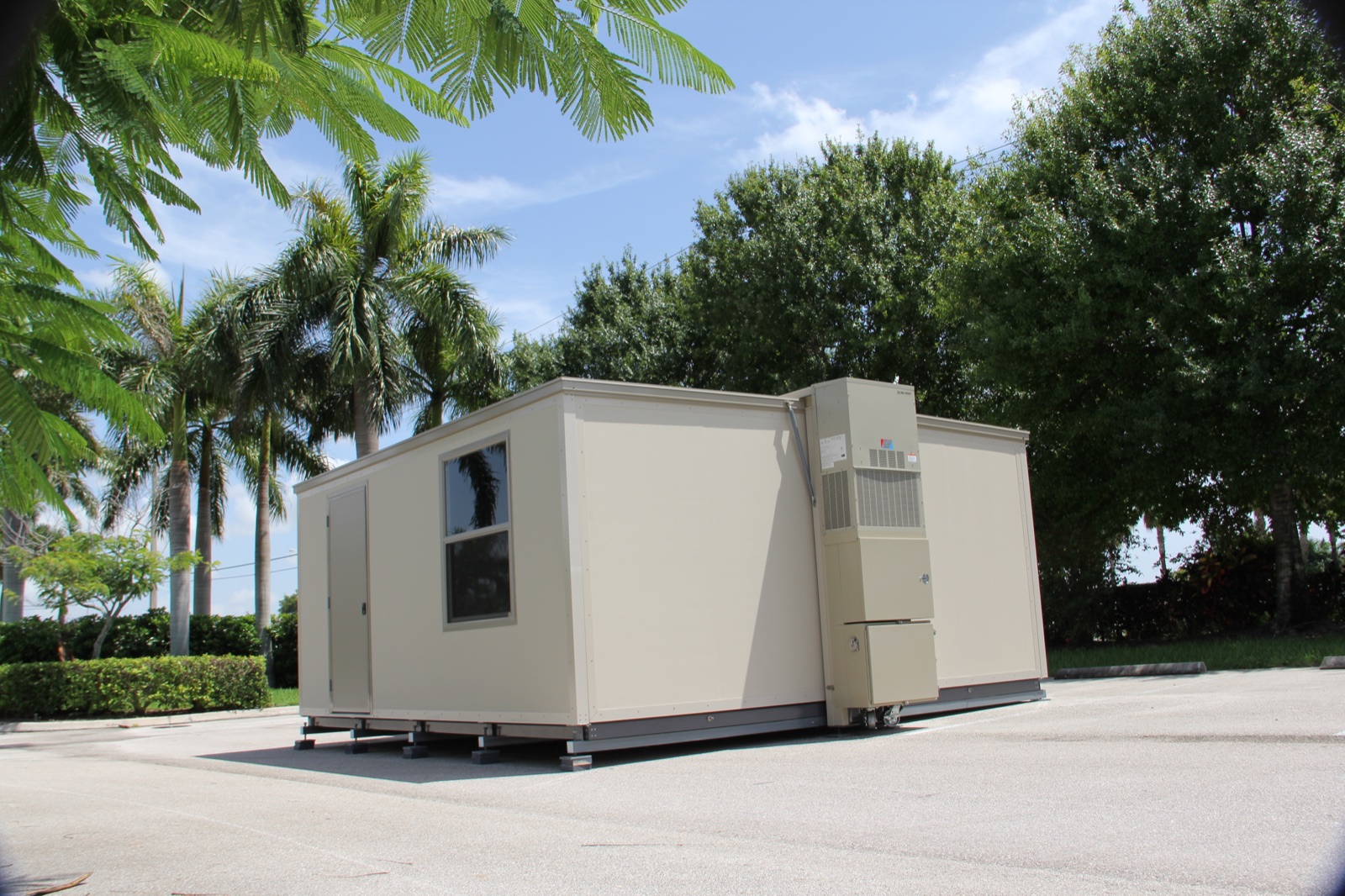
Rapidly deployable infrastructure operates on a different timeline entirely. Transport, deploy, connect utilities, and become fully operational in days or hours. That isn't a minor efficiency improvement. It's a fundamentally different way of thinking about what infrastructure can be.
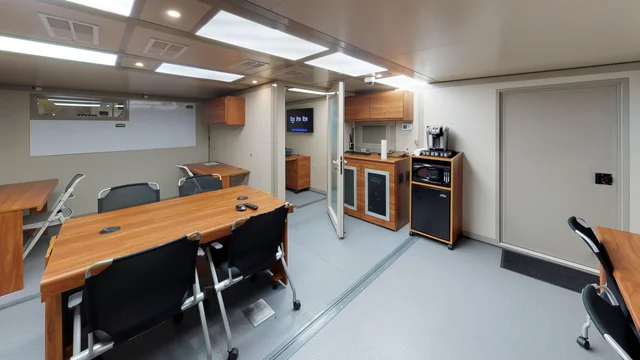
What makes this shift particularly compelling is that deployable infrastructure isn't just faster, it's more versatile. A temporary fire station deployed during renovations doesn't become obsolete when construction ends. It can become a command center, a training facility, an emergency operations center, or a mobile support unit for large-scale public events. A deployable medical facility can serve as surge capacity one month, triage operations the next, and continuity space during a future renovation after that. The goal isn't temporary occupancy. The goal is long-term operational adaptability. Infrastructure that evolves alongside the mission rather than locking an organization into a single fixed purpose.
The broader construction industry is already moving in this direction. McKinsey & Company has reported that modular construction methods can compress project timelines by 20% to 50% under the right conditions, and Dodge Construction Network found that nearly 90% of modular and prefabrication users reported measurable improvements in productivity, quality, or schedule certainty. Organizations aren't adopting these strategies because they're novel. They're adopting them because operational continuity, schedule certainty, and risk reduction have become strategic priorities and deployable infrastructure delivers on all three.
The future of infrastructure isn't a choice between permanent buildings and deployable systems. It's both, working together. Permanent facilities serve as long-term operational anchors. Deployable infrastructure fills the gaps during renovations, disasters, surges, infrastructure failures, and the dozens of other scenarios where waiting for traditional construction simply isn't an option. That combination creates something traditional construction alone cannot which is a resilient, adaptive infrastructure ecosystem capable of maintaining operations under pressure.
Organizations that build this kind of flexibility into their planning aren't just better prepared for the next disruption.
They're the ones that recover fastest when it arrives.
When Waiting for Construction Isn't an Option
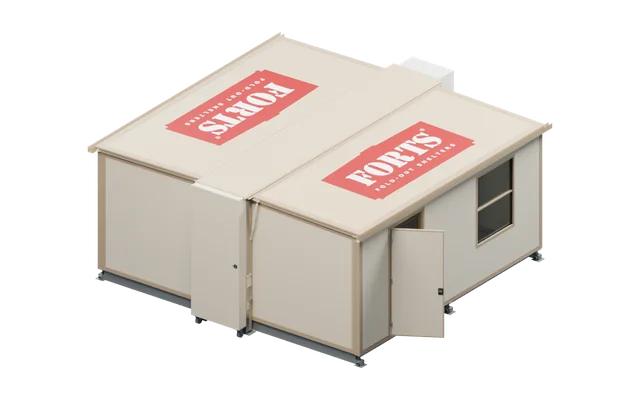
FORTS® gives you more than a short-term structure. It delivers a long-term deployable infrastructure asset that can support the continuity of services. Whether your department is preparing for construction, expansion, emergency response, disaster recovery, or long-term operational readiness, FORTS® is built to adapt with your mission. Click Here to schedule a consultation, request a demo or schedule a visit.