
When Healthcare Is Miles Away, Bring It Closer

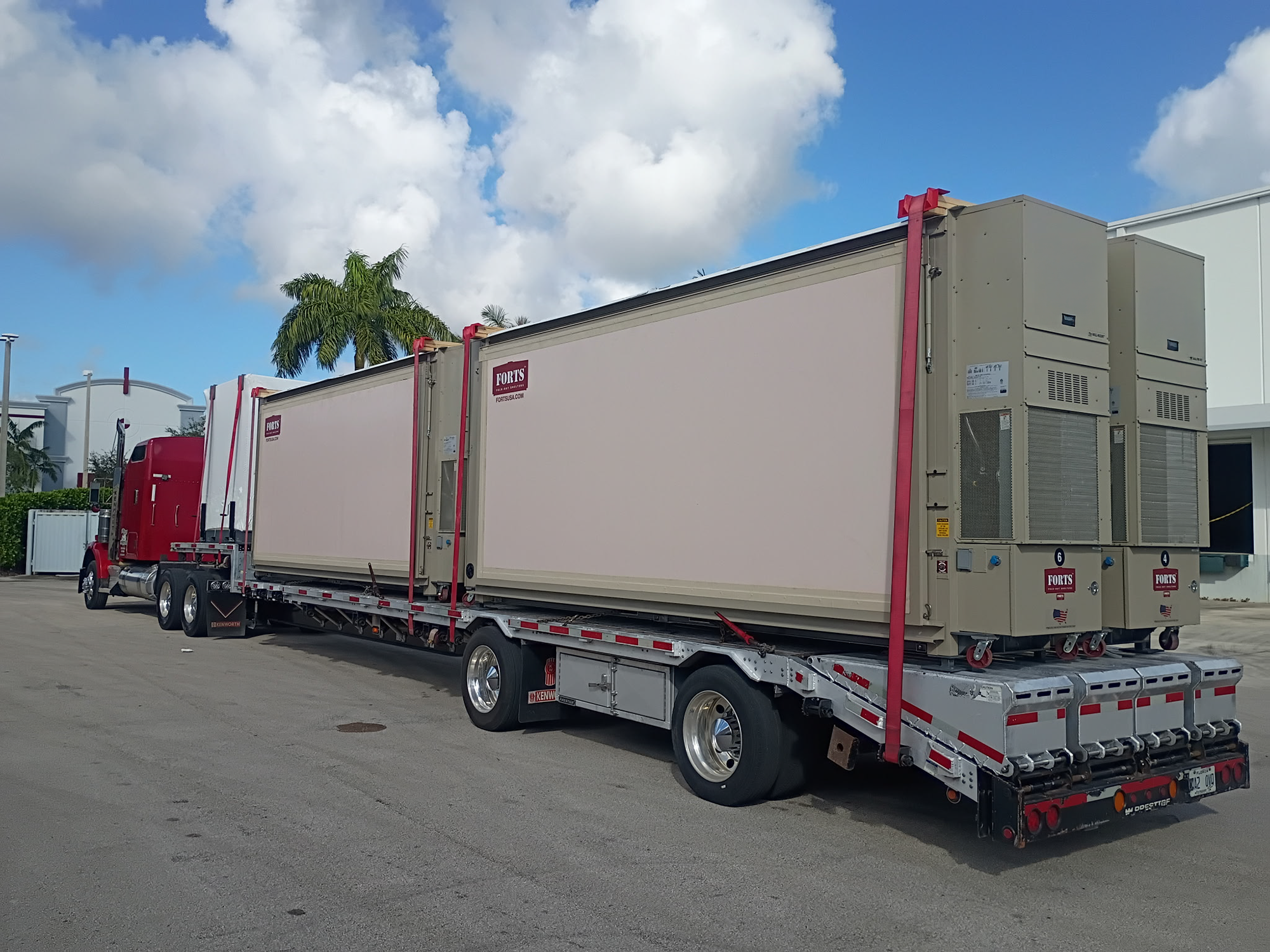
A semi-truck hauling two FORTS Standard units across highway to rural city.
The Problem Is Distance. Everything Else Is Detail.
In rural America, the clinical risk is measured in miles. When the only emergency facility for 40 miles is unavailable, every downstream problem, outcomes, liability, community trust, volume, reputation traces back to one variable, how far the patient has to travel to reach care. Which is why the assumption buried inside most continuity plans is so dangerous. That assumption is that care can only happen inside the hospital you already own. Break the building, and you accept the distance. There is another option. If the facility can't hold the care, move the facility to the community.
What Distance Actually Costs
The federal record is not ambiguous. The U.S. Government Accountability Office found that more than 100 rural hospitals closed between January 2013 and February 2020. Residents in affected communities then traveled roughly 20 additional miles for common services such as inpatient care, and roughly 40 additional miles for less-common services. Those counties already had fewer healthcare professionals, and physician availability declined even further after closure. The trend held. The Health Resources and Services Administration reports 152 rural hospital closures between 2010 and 2025, including 52 Critical Access Hospitals. Miles are only the visible cost. Research by Miller and colleagues found that rural hospital closures increased EMS transport times by approximately 2.6 minutes and total activation time by approximately 7.2 minutes, demonstrating the increase in time-to-definitive-care for chest pain, stroke, trauma, and obstetric emergencies.
FORTS USA
What if healthcare infrastructure could move instead?
Washington Already Decided Proximity Is Worth Paying For
Federal policy has conceded the point twice.
Critical Access Hospitals
A CAH generally must be located more than a 35-mile drive from another hospital, with different standards in certain mountainous or secondary-road circumstances. Qualifying CAHs are reimbursed by Medicare for many inpatient and outpatient services at 101% of reasonable costs. Distance is written directly into federal payment law.
Rural Emergency Hospitals
Beginning in 2023, Medicare created a new provider category. Eligible facilities can drop inpatient services while maintaining emergency, observation, and other outpatient care. Qualifying REHs receive an additional 5% payment on covered REH services above the applicable outpatient rate, plus an additional monthly facility payment. A 2026 study in JAMA Network Open described the intent plainly the REH designation was created to preserve access to care amid continuing rural hospital closures, trading inpatient services for enhanced financial support meant to keep clinical resources local.
Both programs make the same bet that keeping care near the community is worth real money. Both programs also share the same gap. They fund the organization. Neither one replaces the building.
The Building Is the Unmanaged Risk
A rural hospital doesn't have to close to stop functioning. It only has to become unusable. A hurricane takes the roof. A water line floods a clinical wing. Mold remediation closes half a floor. A fire damages a critical department. The ED goes under renovation. A capital project displaces service lines for eighteen months.
The organization survives all of it. The license, the physicians, the nurses, the equipment, the patients all still there. What vanished is square footage. And square footage is what converts back into distance.
So the honest scorecard looks like this:
101% cost-based reimbursement will not replace a roof.
Medicare certification will not stop a catastrophic plumbing failure.
A full medical staff will not let you treat patients in a gutted emergency department.
A full waiting room means nothing if construction has closed a third of your building.
Every rural health system owes its board two answers, not one. How do we keep the organization operating? How do we keep physical capacity in the community?
Most strategic plans answer only the first.
Your Preparedness Plan Doesn't Create Space
Medicare-participating providers already operate under federal emergency-preparedness requirements. CMS states that its Emergency Preparedness Rule establishes national requirements intended to ensure healthcare organizations adequately plan for natural and man-made disasters and coordinate with federal, state, tribal, regional, and local emergency-preparedness systems. Compliance is a condition of participation in Medicare and Medicaid.
So you have a plan. Look at what it actually produces.
An emergency plan names another hospital.
A communication plan names who makes the calls.
An evacuation plan names where patients go.
Not one of those documents creates a single square foot of clinical space.

FORTS USA
Continuity planning answers "What will we do”, but not "Where will we do it?"
FORTS Brings the Facility to the Community
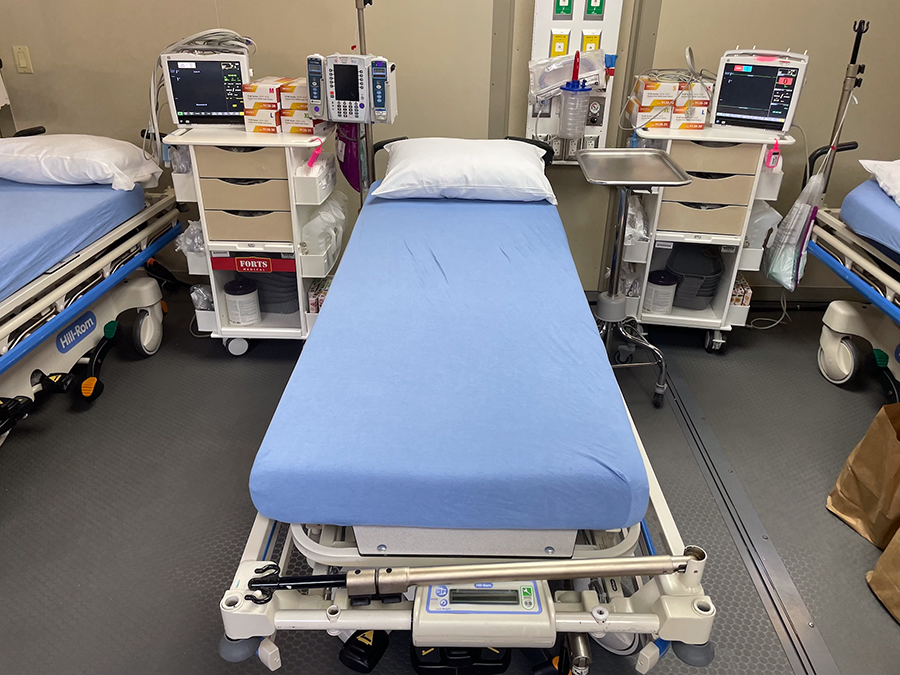
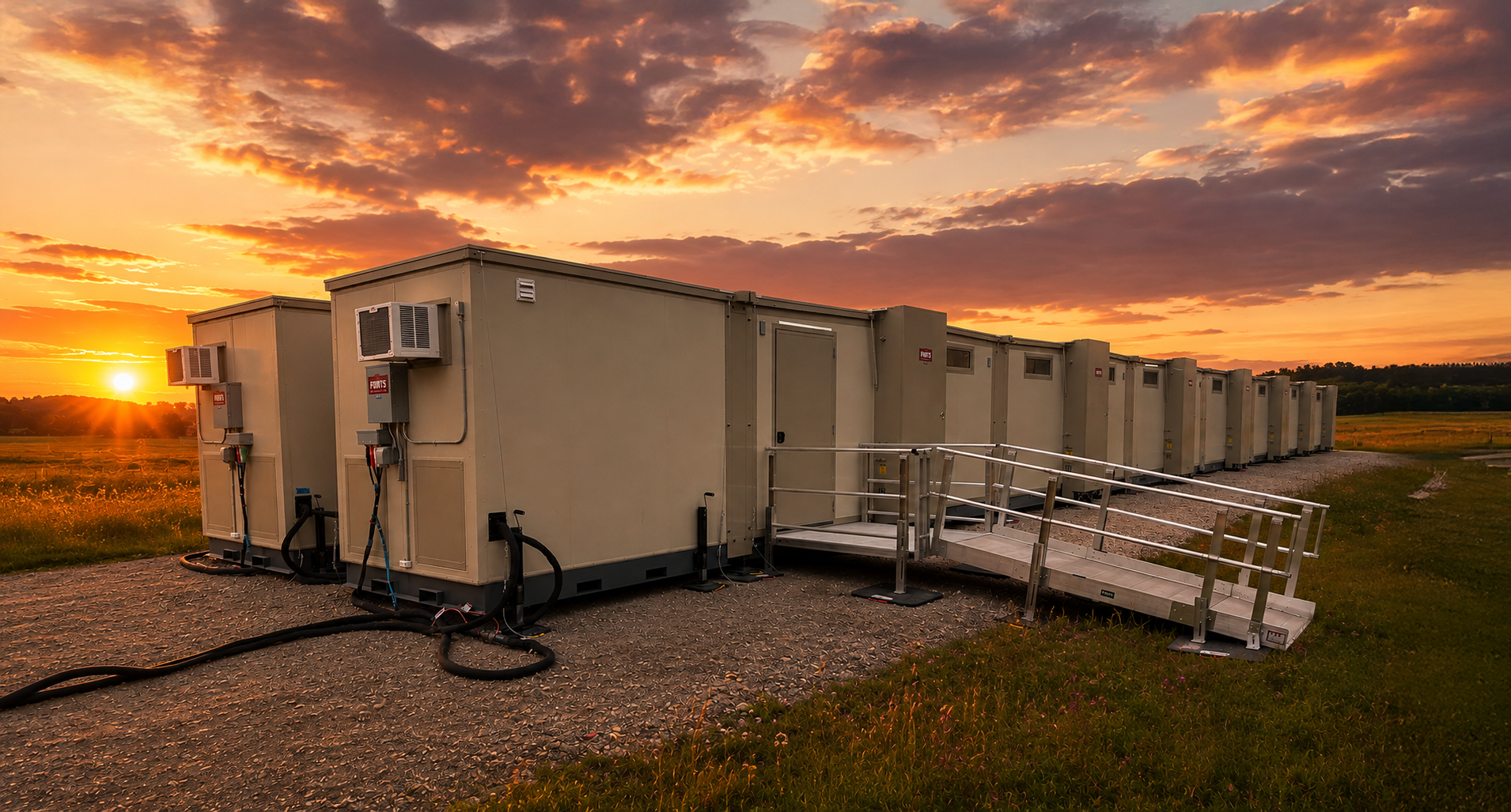
FORTS® deployable medical infrastructure is hard-walled, rapidly deployable facility space that can be configured for healthcare and other critical operations. Instead of defaulting to conventional permanent construction every time you need capacity, FORTS® systems can establish clinical space adjacent to your existing hospital, on another approved site, or as part of a broader continuity operation keeping care inside the community instead of exporting it 40 miles down the road.
Depending on configuration and applicable approvals, FORTS® can support:
temporary clinical and examination space
emergency and outpatient support functions
medical surge capacity
replacement space during renovation and capital projects
disaster recovery operations
isolation and specialty-care functions
administrative and command operations
planned service-line expansion
This is not a trailer with a clinic inside it. The point is not mobility for its own sake. The point is durable, hard-walled infrastructure capable of supporting serious clinical operations while the permanent environment is unavailable or insufficient.
The disaster-medicine literature converges on the same requirements. A comprehensive review in Prehospital and Disaster Medicine by Bitterman and Zimmer examined portable healthcare facilities from mobile hospitals to solid-container temporary facilities, and argued that the next generation must improve on speed to operation, accessibility, sustainability, flexibility, and modularity.
Those are precisely the specifications a displaced rural hospital needs. They are the specifications FORTS® is engineered against.
A 2025 scoping review in BMC Health Services Research by Sheerazi, Awad, and von Schreeb reviewed nearly 3,000 documents on mobile health units deployed after earthquakes, floods, tsunamis, hurricanes, typhoons, cyclones, and landslides. Those units improved outpatient access for populations cut off from normal services — but the review also flagged real failure points: logistics, transportation, referral capacity, and communications.
That finding is the strongest argument for planning ahead rather than improvising. Deployable capacity works when it is treated as infrastructure. It fails when it is treated as a last-minute rental.
The Regulatory Reality, Stated Plainly
Any vendor who promises reimbursement continuity should be treated with suspicion. Here is the straight version. Deploying temporary medical facility space does not automatically guarantee continued CAH or REH certification or Medicare reimbursement. CMS Conditions of Participation, state hospital licensing, provider enrollment, approved locations, life-safety requirements, scope of services, and reimbursement rules may all apply and must be evaluated for your specific hospital, configuration, and circumstance.
FORTS® builds the space. You and your regulatory counsel confirm the pathway. That analysis belongs in your continuity plan now, not on a 2 a.m. conference call during an active water intrusion event. But once the pathway is cleared, the logic is hard to argue with: if care can be delivered safely and lawfully from approved temporary infrastructure, the loss of a building should never mean the loss of local healthcare capacity.
FORTS® Medical Facility
Decide Now, Not During the Disaster
Nobody buys fire extinguishers after the fire. Nobody writes the evacuation plan at landfall.
Physical continuity deserves the same discipline. Decide the following in advance:
Where would temporary clinical infrastructure be sited?
What utilities and connections would it require?
Which service lines relocate, and in what order?
What state and CMS approvals are needed?
How do patients flow through it?
What equipment moves, and who moves it?
How fast can it be operational?
Who deploys it, and under what contract?
Then the question that determines whether any of the above matters:
How do we secure the infrastructure when every other organization hit by the same disaster is trying to secure it too?
That is a preparedness question, not a procurement question. Preparedness gets answered on a calendar. Procurement gets answered in a queue — and in a regional disaster, the queue is where rural hospitals lose.
The Hospital of the Future Isn't Always a Building
Three facts now sit on the same table. The research shows what distance costs: longer travel, reduced access, slower emergency transport. Federal policy shows the government already pays to keep care close, through CAH and REH designations. Disaster-medicine literature shows temporary, deployable facilities can carry real clinical capacity when permanent ones cannot. Together they point to one conclusion. Rural healthcare resilience will not rest solely on keeping every hospital building intact. It will rest on having infrastructure that deploys when the building cannot.
That is what FORTS® delivers not an emergency workaround, but planned physical continuity, sited and specified before the day you need it. Because when healthcare is suddenly miles away, the answer isn't to make the community travel farther.
It's to bring healthcare closer.
Don't Wait Until You Need the Space
If your hospital lost critical clinical space tomorrow, where would you deliver care for the next 30, 90, or 180 days? That question shouldn't be answered during the emergency. FORTS® can help hospitals, health systems, and rural healthcare leaders plan deployable medical infrastructure before a disruption becomes a crisis—identifying the capacity, configuration, deployment strategy, and physical space needed to keep essential operations moving. Your backup plan shouldn't end at transferring patients somewhere else. It should include a plan for keeping care close to home.
Plan your physical continuity strategy. Talk with FORTS® about deployable medical infrastructure for your hospital or healthcare system.
Be ready before the building isn't.
Research & Government Sources
U.S. Government Accountability Office
Rural Hospital Closures: Affected Residents Had Reduced Access to Health Care Services (GAO-21-93)
Health Resources and Services Administration
Rural Hospital Programs and rural hospital closure data
Miller et al.
The Effect of Rural Hospital Closures on Emergency Medical Service Response and Transport Times
Centers for Medicare & Medicaid Services
Critical Access Hospital certification, eligibility and reimbursement guidance
Centers for Medicare & Medicaid Services
Rural Emergency Hospital program, Conditions of Participation and payment policies
JAMA Network Open (2026)
Early Evaluation of the Rural Emergency Hospital Program
Bitterman & Zimmer — Prehospital and Disaster Medicine
Portable Health Care Facilities in Disaster and Rescue Zones: Characteristics and Future Suggestions
Sheerazi, Awad & von Schreeb — BMC Health Services Research (2025)
Use of Mobile Health Units in Natural Disasters: A Scoping Review
Centers for Medicare & Medicaid Services
Emergency Preparedness Rule and provider guidance