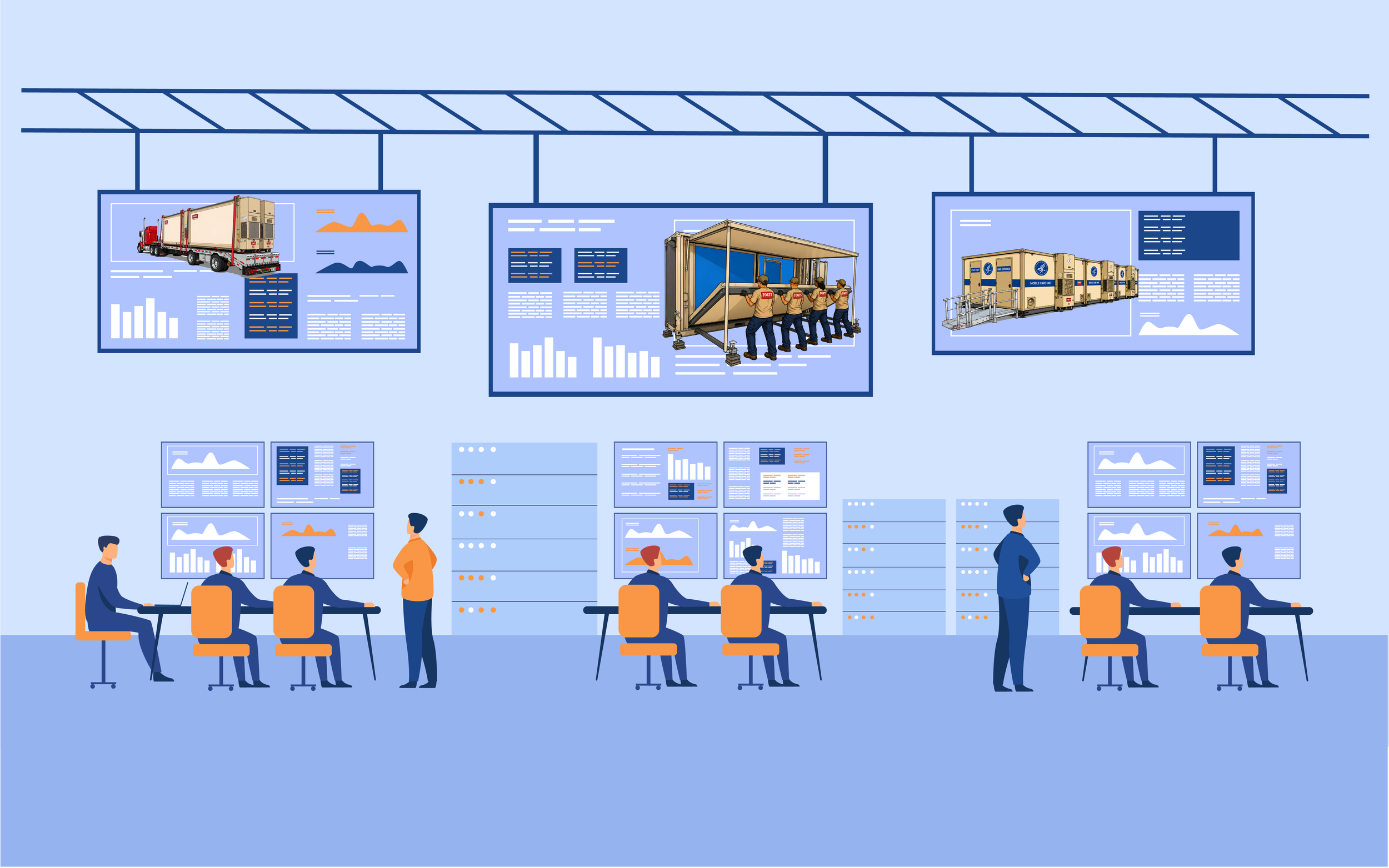

America's Readiness Gap Is Growing. Are You Prepared?
Every day, organizations across the United States depend on facilities they assume will be available tomorrow.
Fire stations. Hospitals. Emergency operations centers. Public safety facilities. Government buildings. Critical infrastructure.
But what happens when they aren't?
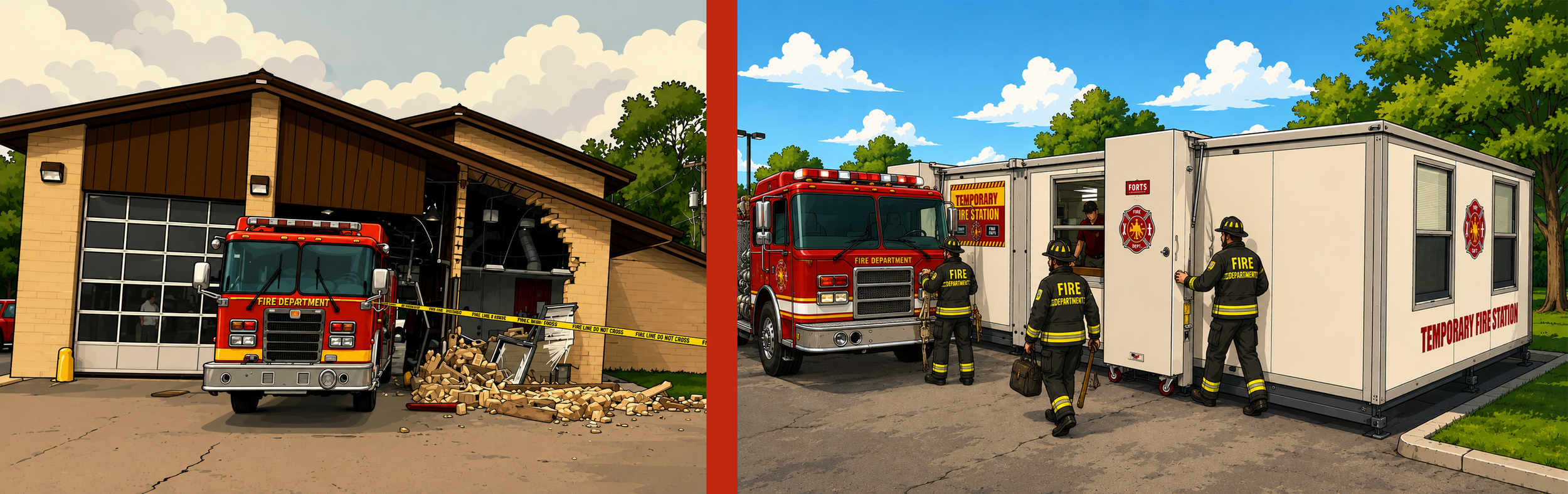
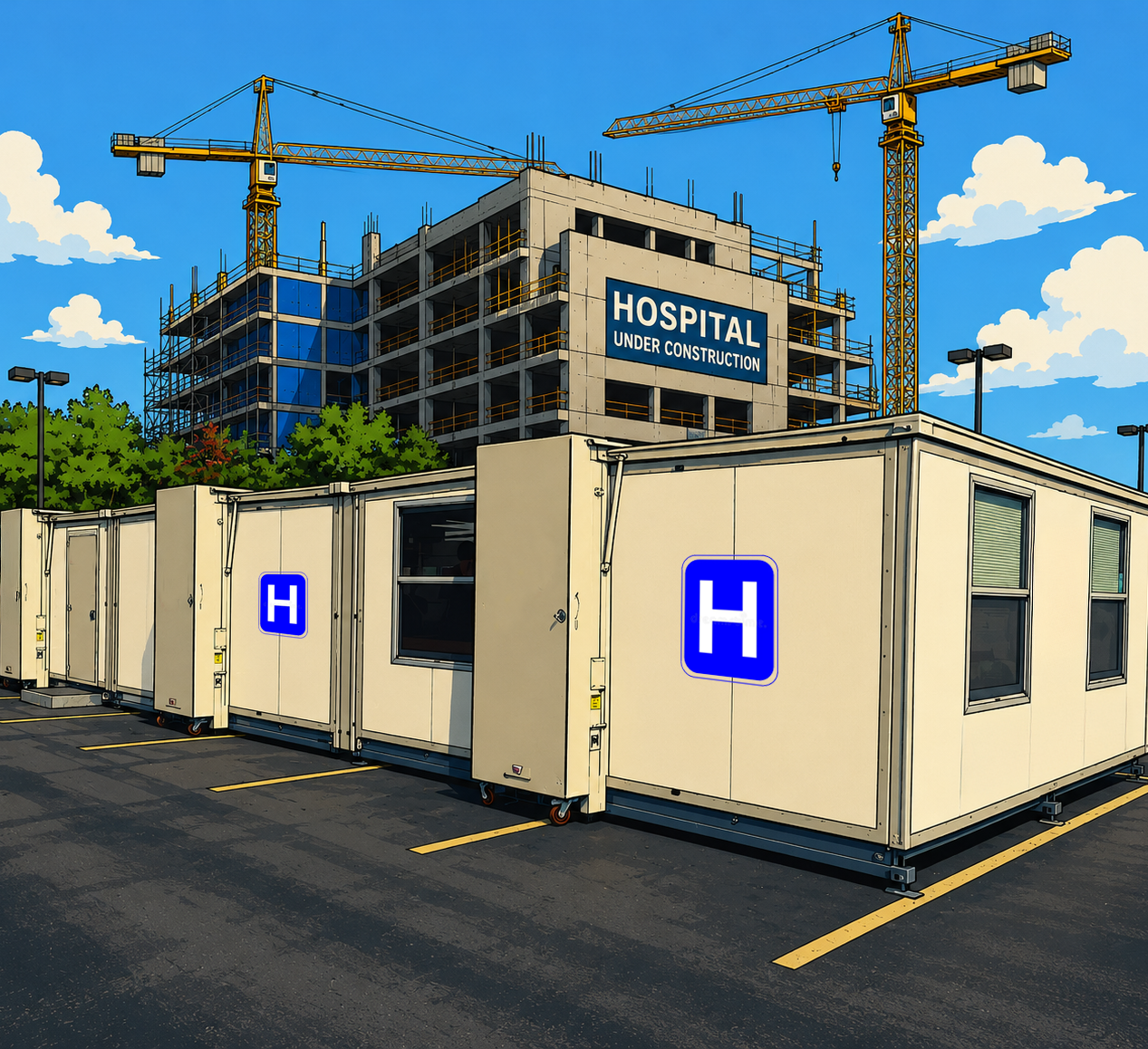
What happens when a fire station undergoes a year-long renovation? When a hospital loses patient capacity during construction? When a hurricane damages a critical facility? When an emergency operations center becomes unavailable during a disaster?
These are no longer hypothetical questions.
Across the country, aging infrastructure, increasing disaster costs, workforce shortages, and record levels of construction activity are creating operational vulnerabilities that many organizations are not fully prepared to address.
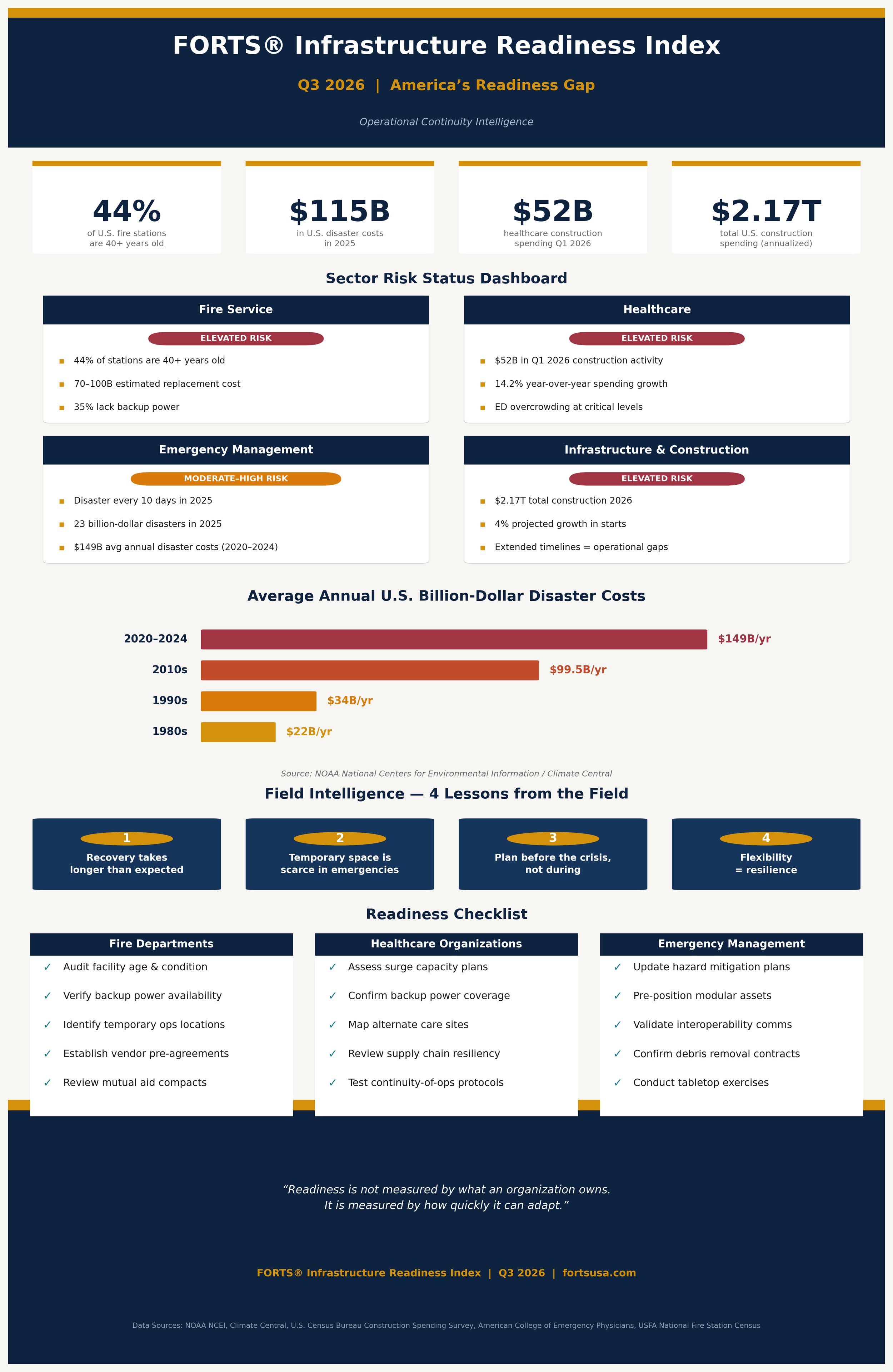
According to the latest FORTS® Infrastructure Readiness Index, approximately 44% of U.S. fire stations are now more than 40 years old. Healthcare construction spending reached $52 billion in the first quarter of 2026 alone. Disaster costs have risen dramatically, averaging $149 billion annually between 2020 and 2024. Meanwhile, organizations continue to face growing demands for services while operating from facilities that are aging faster than they can be replaced.
The result is a growing readiness gap. Many organizations have emergency plans. Many have backup generators. Many have mutual aid agreements.
Far fewer have a clear strategy for maintaining operations when a facility becomes unavailable.
That is the challenge explored in the inaugural FORTS® Infrastructure Readiness Index.
Understanding America's Operational Continuity Challenge
The FORTS® Infrastructure Readiness Index was developed to provide leaders in public safety, healthcare, emergency management, government, and critical infrastructure with a clearer understanding of the risks shaping today's operational environment.
The report examines four major areas affecting readiness:
Fire Service Infrastructure
Healthcare Readiness
Emergency Management Preparedness
Infrastructure and Construction Risk
It also highlights emerging disaster trends, operational lessons learned from real-world disruptions, and practical readiness actions organizations can implement today.
More importantly, it asks a question that every leader should be prepared to answer:
If your primary facility became unavailable tomorrow, how long would it take to restore operations?
Why This Matters Now
Historically, facility disruptions were viewed as rare events.
Today, they are becoming increasingly common.
In 2025, the United States experienced 23 billion-dollar disasters causing more than $115 billion in damages. Construction activity reached record levels, creating extended periods where critical facilities must continue operating while undergoing renovation or expansion. Public safety and healthcare organizations continue to face staffing shortages and increasing demand for services.
The question is no longer whether disruptions will occur.
The question is whether organizations are prepared to maintain operations when they do.
Key Findings From The Report
Among the findings highlighted in the Q3 2026 Infrastructure Readiness Index:
Nearly half of U.S. fire stations are more than 40 years old.
Healthcare construction is accelerating at one of the fastest rates in the nation.
Disaster costs have increased nearly sevenfold since the 1980s.
Continuity planning gaps remain widespread across multiple sectors.
Organizations with flexible continuity strategies consistently recover faster from disruptions.
These findings point to a common reality:
Operational continuity can no longer be treated as an afterthought.
Download The Full Report
The FORTS® Infrastructure Readiness Index is designed to help decision-makers evaluate risks, identify readiness gaps, and strengthen continuity planning before disruptions occur. Whether you lead a fire department, healthcare system, emergency management agency, utility, government organization, or critical infrastructure operation, this report provides valuable insights into the challenges shaping the future of operational readiness.
Download the full Q3 2026 FORTS® Infrastructure Readiness Index and discover how prepared your organization is for the next disruption.
Because readiness is not measured by what an organization owns. It is measured by how quickly it can adapt.
Download Now - The FORTS® Infrastructure Readiness Index
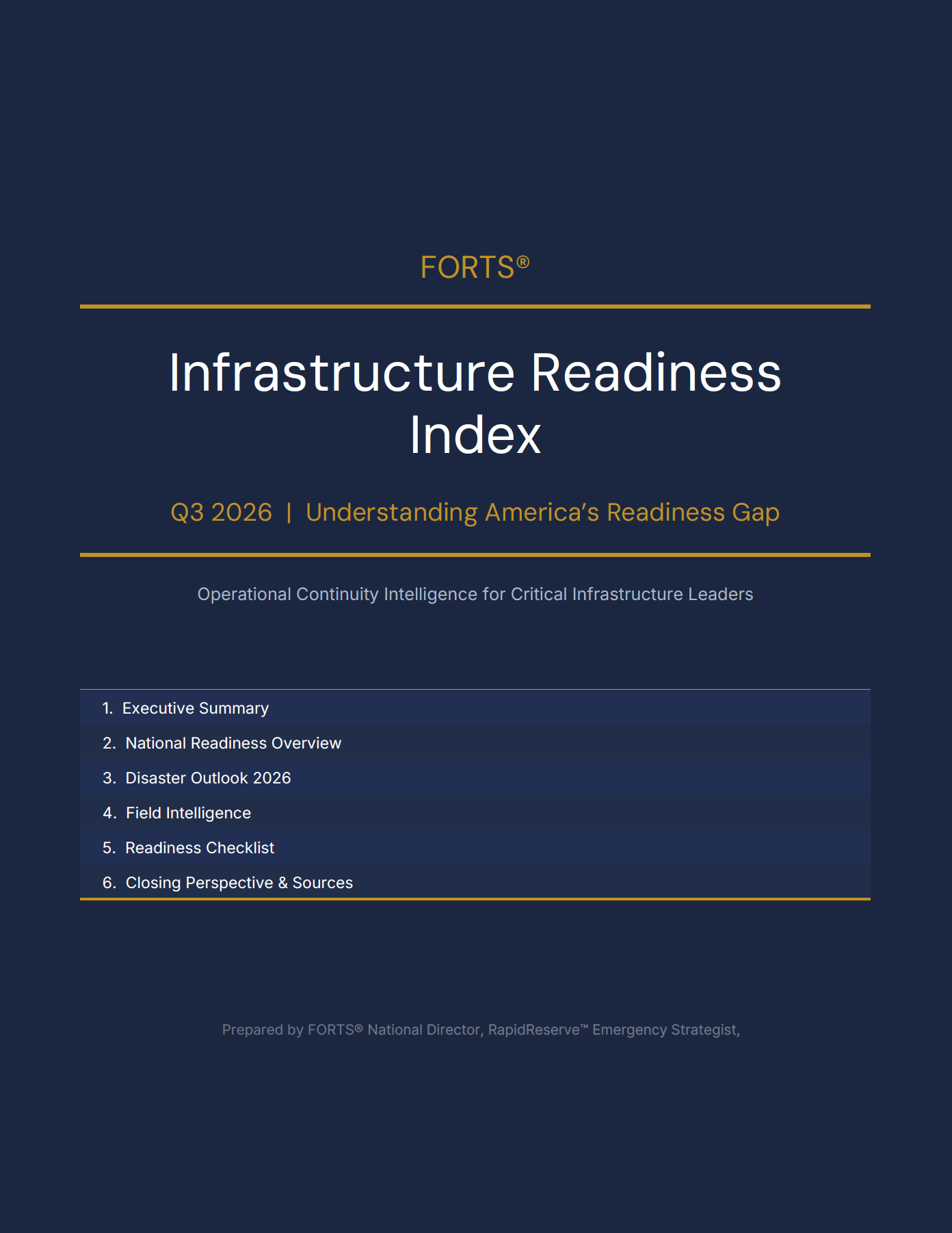
FORTS Infrastructure Readiness Index Report
FORTS Infrastructure Readiness Infographic
Learn more about ….